Choose Curtains for the Room You Actually Live In
Balance privacy, daylight, fabric care and radiator positions when choosing window coverings.

Lifestyle photography via Unsplash. Images illustrate the setting; pictured items are not product endorsements.
In this story
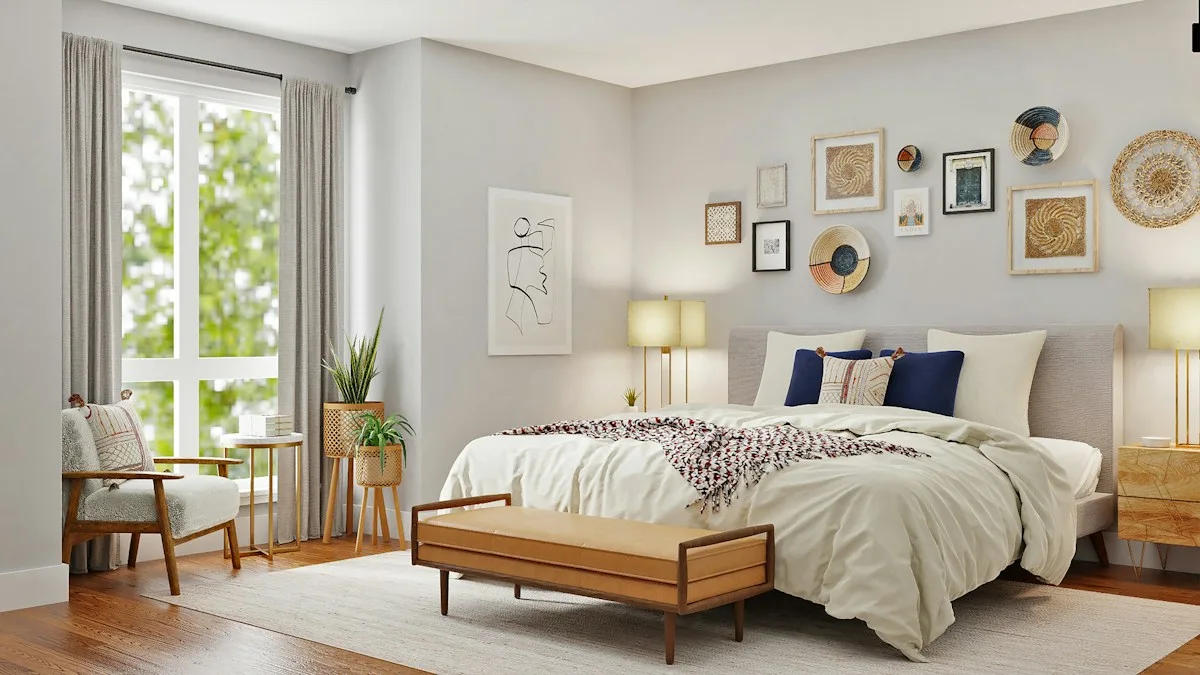
Curtains are a large piece of fabric in a room, so they affect much more than the view of the window. They can soften a hard edge, offer privacy and change the way daylight reaches furniture. They can also drag across a doorway, hide a radiator or become difficult to open behind a sofa. Before choosing a colour, stand beside the window and imagine the curtains fully open and fully closed. Both states have to work with everyday life.
Start with the way you use the space
Write down what the window needs at different times. A street-facing sitting room may need daytime privacy without losing all its light. A bedroom may need a different level of light control. These are separate decisions from the decorative fabric. Consider whether a blind and curtains together would solve a genuine problem, or simply add maintenance. Check the space above and beside the window for a suitable track or pole, and arrange secure fitting appropriate to the wall and the hardware.
Try the arrangement before committing
Measure using the retailer's instructions for the exact heading and fitting you intend to buy. The glass dimensions alone are not enough. Check where the hem would finish in relation to furniture, radiators and floor cleaning. Fabric samples help reveal transparency, texture and colour in your own light. Look through the material against the window and compare it under an evening lamp. If a lining is important, read its stated function instead of assuming all heavier-looking curtains provide the same result.
What to look for when buying
Curtain purchasing starts with the chosen fitting system: eyelets, hooks and different headings do not use identical measurements. Check the product's finished width, drop and whether the listing describes one panel or a pair. Read the care method before choosing a fabric that will hang close to cooking, dust or pet hair. If ordering a custom size, confirm the measurement process and cancellation or return terms before committing.
| Option | Why consider it |
|---|---|
| Ready-made curtains in a suitable standard size | It can be convenient and economical when the dimensions genuinely suit the window. |
| Made-to-measure curtains | It offers control over fit but needs careful measurements and may have restricted returns. |
Ready-made curtains are attractive when a standard drop and width produce the finish you want without awkward alterations. Include any alteration costs in the comparison. Made-to-measure becomes more useful for unusual windows, a particular heading or a precise finish around built-in furniture. Keep the decision tied to the window's actual constraints; paying for custom work is less persuasive when the extra choices do not change how the room functions.
Browse ready-made curtain sizes at IKEA UK. Ordinary retailer link; recommendations above concern categories, not tested individual products.
A purchase worth reconsidering
Avoid choosing an extravagant floor-pooling hem if the window sits beside a busy route or attracts pet hair. It can look lovely in a photograph while being inconvenient in a working room. A more practical finish can still look intentional when the fabric hangs evenly and the fitting is well positioned.
Keep the change useful
Open and close the proposed arrangement mentally before each purchase: can you reach the fabric, clear the furniture and avoid catching the hem? Once fitted, follow the care label and check hardware periodically. For blinds with cords, follow the manufacturer's safety instructions and keep controls safely secured.
After installation, close the curtains from the position you normally approach them. Check whether the stack of fabric obstructs a handle or reduces the daylight more than expected when open. Watch the hem as you vacuum or pass nearby. If it catches, address the fitting or length rather than accepting an annoyance that repeats every day. Keep any fabric-care information with the household maintenance notes.
Frequently asked questions
Do curtains need to match the walls?
No. A related tone can feel quiet, while contrast can frame the window. Check both against the largest fabrics in the room.
Are made-to-measure curtains always the better choice?
Only when the fit or fabric options justify them. Standard sizes may work very well for a straightforward window.