A Small Dining Space with Room for a Proper Welcome
Choose a table and seating that support everyday meals as comfortably as occasional guests.
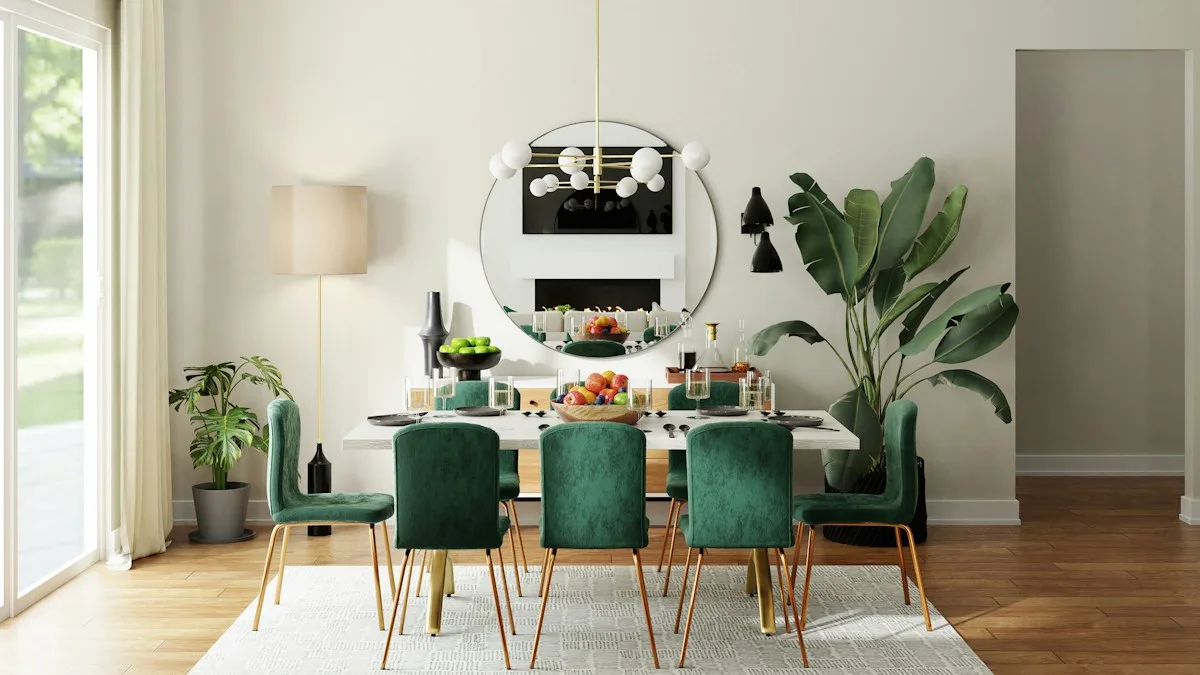
Lifestyle photography via Unsplash. Images illustrate the setting; pictured items are not product endorsements.
In this story
A dining space may also be the homework desk, the parcel-opening station and the place where someone works between meetings. That does not make it less suitable for a welcoming meal. It does mean the furniture must recover easily from everyday use. Begin with the people who sit there most often. A table large enough for an imagined party but difficult to walk around every morning can be a poor exchange. Hospitality depends on usable seats, clear surfaces and an arrangement in which conversation feels easy.
Decide what the arrangement needs to do
Mark the proposed tabletop on the floor with removable tape, then add the space chairs occupy when someone is seated and getting up. Test nearby doors and cupboards with the outline in place. A round table can make conversation pleasant and soften a route, but its legs may still limit where chairs fit. A rectangular table can tuck neatly against a wall between meals. Consider the base as carefully as the top: knees, chair arms and table legs all need to coexist.
Try the arrangement before committing
Store the things that routinely land on the table nearby, with a basket or drawer that can be cleared without sorting every paper at dinner time. Keep daily tableware within a reasonable route of the kitchen. If you use a bench, check how people at the far end will get out and whether they have enough support for a longer meal. Add light above or beside the table so faces are comfortably visible. A decorative pendant should still work when the table is extended.
What to look for when buying
A dining table deserves measurements with the chairs you intend to use. Check the height of the underside, the position of any apron and the distance between the legs. Arms on a chair may prevent it tucking underneath even when the seat height appears suitable. For an extending model, inspect how the leaf is stored and whether opening the mechanism requires moving the entire table or clearing nearby furniture.
| Option | Why consider it |
|---|---|
| A compact fixed table | It keeps daily circulation predictable with fewer moving parts. |
| An extending table | It accommodates occasional guests but requires space for its fully opened form. |
A fixed table is a straightforward choice when everyday seating and occasional guests fit comfortably without changing the room. An extending table suits a household that will use its extra places and can create the necessary clearance. Test the fully extended footprint, including someone standing behind a chair. The extension is less valuable if accommodating it requires dismantling half the room or leaving a cupboard inaccessible throughout dinner.
Browse dining furniture dimensions at IKEA UK. Ordinary retailer link; recommendations above concern categories, not tested individual products.
A purchase worth reconsidering
Do not count seats by pushing unused chairs tightly together in a product photograph. People need room to use cutlery and move their arms. Try the seating arrangement with place settings before assuming an extra chair makes an extra comfortable place. Store spare seats where retrieving them is realistic.
Keep the change useful
Make clearing the table a shared transition rather than a large weekend project. A designated tray for work items can move them intact while the surface becomes ready for dinner. After hosting, keep the parts that helped and release the accessories that only complicated washing up.
Arrange a normal meal on the proposed footprint with bowls, glasses and serving dishes. Leave the chairs slightly pulled out, as they will be while people talk after eating. Walk behind the busiest seat and reach the nearest cupboard. If the setup is tight, a different table base or chair profile may help more than reducing the table until there is nowhere comfortable to put the food.
Frequently asked questions
Is a bench better in a small room?
Sometimes. It can tuck under a table, but access and back support matter. Try the full seating arrangement before choosing it.
Do dining chairs have to be upholstered?
No. Compare comfort, cleaning and the length of your usual meals. A removable seat pad may offer flexibility.