Create a Bedroom That Feels Settled at the End of the Day
Give clothes, bedside essentials and lighting clear places before adding another decorative layer.
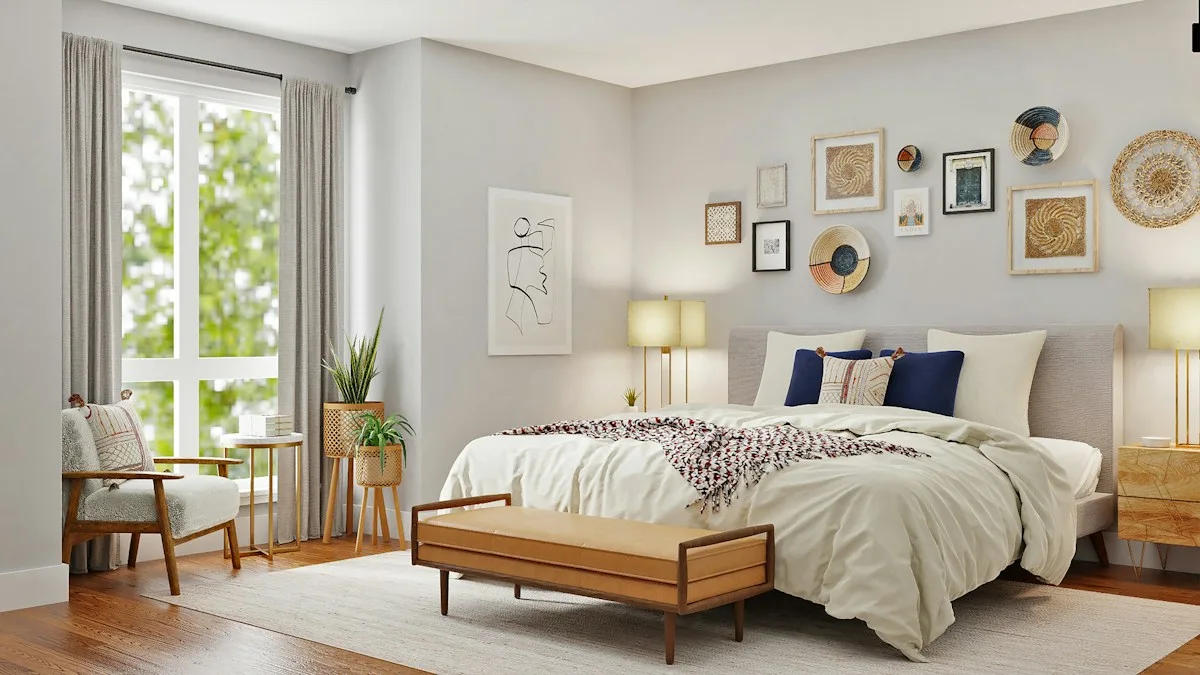
Lifestyle photography via Unsplash. Images illustrate the setting; pictured items are not product endorsements.
In this story
The bedroom often receives everything that has no immediate home: a half-worn jumper, an unopened parcel, bags waiting for the weekend. By evening, the room may feel unfinished even when the bed is made. A calmer arrangement begins with those ordinary objects. You do not need to turn the room into a hotel or remove every personal possession. You need a clear route to bed, a usable place beside it and a believable answer to the question of where tomorrow's clothes will go.
Give the everyday tasks a clear place
List the activities the room supports besides sleeping. Dressing, reading and getting ready may each need a small zone. Put clothing storage near the place you change rather than assuming every wardrobe arrangement is fixed. A hook or a narrow valet rail can accommodate clothes that will be worn again, provided it does not become an unlimited second wardrobe. Keep the surface beside the bed for things used there, and move paperwork to a place where it can be dealt with properly.
Try the arrangement before committing
Look at the room after dark before choosing paint or lamps. A colour that seems gentle at noon may feel quite different under your existing bulbs. Use samples on more than one wall and check them beside the bedding. Add light where you dress and a separately controlled light for reading. Choose bedding layers you can adjust comfortably rather than buying a fixed decorative arrangement that is cumbersome to remove each night. Leave pillows and throws somewhere deliberate when they are off the bed.
What to look for when buying
Measure bedside furniture against both the mattress height and the space left beside the bed. Open a proposed drawer on the floor plan and check whether it meets a wardrobe door. For bedding, confirm actual dimensions rather than relying on a size name alone, especially when mixing brands. Read fabric and care information with your washing arrangements in mind. A generous decorative layer is less useful if it cannot be cleaned conveniently.
| Option | Why consider it |
|---|---|
| A narrow bedside shelf or compact table | It keeps a restricted route open and encourages a small set of essentials. |
| A bedside cabinet with enclosed storage | It hides extra items but can collect forgotten possessions. |
A small table or shelf suits someone who keeps only a book, drink and lamp beside the bed. Check that all three sit securely without crowding the edge. A cabinet is more useful when medication, glasses or other personal essentials need an enclosed place. Give those objects a defined drawer rather than treating extra capacity as permission to move every loose item from elsewhere in the house into the bedroom.
Browse bedside tables and cabinets at IKEA UK. Ordinary retailer link; recommendations above concern categories, not tested individual products.
A purchase worth reconsidering
Do not solve visible clutter by purchasing containers before checking what belongs in the room. Attractive boxes still occupy space, and lids can make frequently used things frustrating to reach. First remove the objects that should live elsewhere, then measure the storage needed for what remains.
Keep the change useful
Give the room a short reset before the evening becomes busy: return cups, hang the reusable clothes and prepare tomorrow's essentials. This is an environmental routine, not a promise of better sleep. If the room still feels uncomfortable, consider light, noise and personal preferences rather than assuming another cushion will fix it.
Look at the bedside surface immediately before going to bed. Objects appearing there each night tell you what the arrangement actually needs to hold. If the lamp takes most of the surface, consider its base shape before replacing the furniture. Check the room while wearing the clothes you change into there, with drawers open and curtains closed; the working arrangement may differ from its neat daytime appearance.
Frequently asked questions
Must a bedroom be painted a pale colour?
No. Choose a colour you enjoy in the actual light. A deeper shade can feel comfortable when the lighting and surrounding materials work together.
Should bedside tables match?
They can differ if their heights and proportions work beside the bed. Similar finishes or lamps can provide a connection.