Organise Kitchen Zones for Busy Evenings
Arrange preparation, cooking and clearing around the meals you actually make.
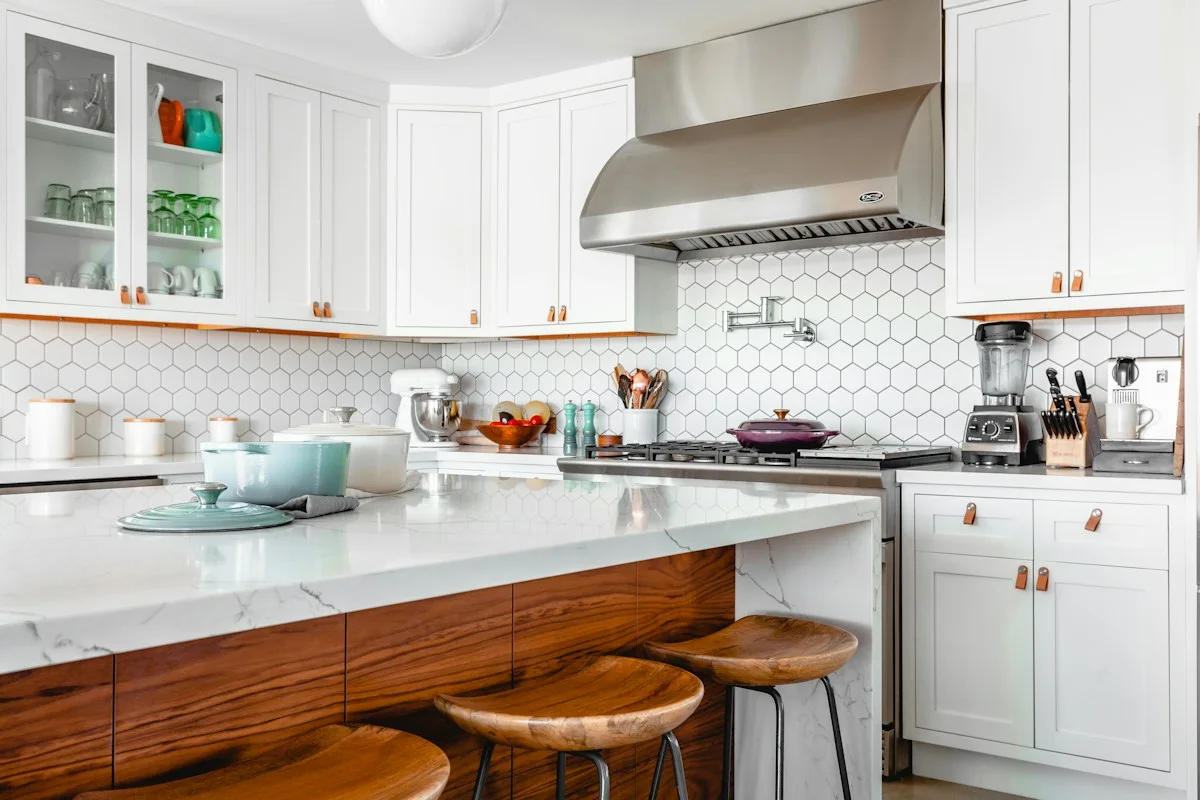
Lifestyle photography via Unsplash. Images illustrate the setting; pictured items are not product endorsements.
In this story
On a busy evening, the kitchen can become a relay race: a chopping board crosses the room, a drawer is opened behind someone cooking, and clean plates compete with groceries for the same patch of worktop. A full renovation is not always the answer. Often the useful improvement is to move a few everyday items so each task has a sensible starting point. Think about the meal you make most often, including the clearing up afterwards, rather than designing only around occasional entertaining.
Start with the way you use the space
Identify a preparation area, a cooking area and a clearing area. These can overlap in a small kitchen, but each should have the tools it needs close by. Keep the board and suitable knives near preparation, frequently used pans near cooking, and washing supplies near the sink. Food storage also needs a logic that anyone in the household can understand. Group ingredients by how they are used, and keep original packaging or readable information where it is needed for storage and allergen checks.
Put the practical details in place
Empty one drawer at a time and replace only the tools you use there. A drawer beside the hob need not contain every utensil you own. Put less frequent equipment farther away and reserve easy access for everyday work. Before adding a rail or open shelf, consider steam, cleaning and what sits underneath it. Keep worktops clear enough for the next task, but do not hide a daily appliance so effectively that using it becomes a chore. The best arrangement balances access with enough working space.
What to look for when buying
Choose drawer organisers from the inside measurements of the drawer, including the clear height beneath the worktop. Check whether adjustable pieces can shift as the drawer opens and whether crumbs can be removed from their corners. A trolley needs an accessible handle, a suitable work surface and a stable position. Compare its working dimensions with the route between sink and cooker rather than measuring only the gap where it will be parked.
| Option | Why consider it |
|---|---|
| Adjustable drawer dividers | It organises an existing footprint without adding another obstacle. |
| A freestanding kitchen trolley | It adds a movable surface but needs a stable parking place and suitable clearance. |
Dividers make sense when the right tools already fit in the right drawer but become tangled. They cannot compensate for a drawer that is too shallow or remote from the task. A trolley can help when the kitchen needs a genuinely additional preparation or storage area. Consider whether moving it is part of a useful routine or simply another thing that must be pushed aside whenever somebody needs the fridge.
Compare kitchen organisers at IKEA UK. Ordinary retailer link; recommendations above concern categories, not tested individual products.
A purchase worth reconsidering
Avoid ordering a complete matching container set before seeing what your cupboards hold. Different foods and pack sizes need different storage, and decanting can separate ingredients from useful instructions. Start with one troublesome shelf. Keep labels and dates readable, and follow the food manufacturer's storage advice.
Keep the change useful
At the end of a normal cooking session, note the object you reached for in the wrong place. Move that item and observe the next few meals. A sequence of small adjustments usually reveals more than a single dramatic cupboard clear-out that nobody else can follow.
Cook a familiar meal after changing one zone and count the moments when you leave the work area to fetch a basic tool. The aim is to understand the route, not race through dinner. Ask another household member to find the utensils without instructions. If they repeatedly search the old drawer, discuss a simple label or a more intuitive location before adding more compartments.
Frequently asked questions
Does a small kitchen need open shelving?
No. Open shelves are useful only when their contents are easy to reach and maintain. Enclosed storage may suit a busy cooking area better.
Should every appliance stay on the worktop?
Keep frequent tools accessible and store occasional ones safely. Let actual use guide the decision rather than a completely empty-worktop ideal.