A Simple Table Setting for Friends Coming Over
Set a welcoming table with room for serving, conversation and the things you already own.
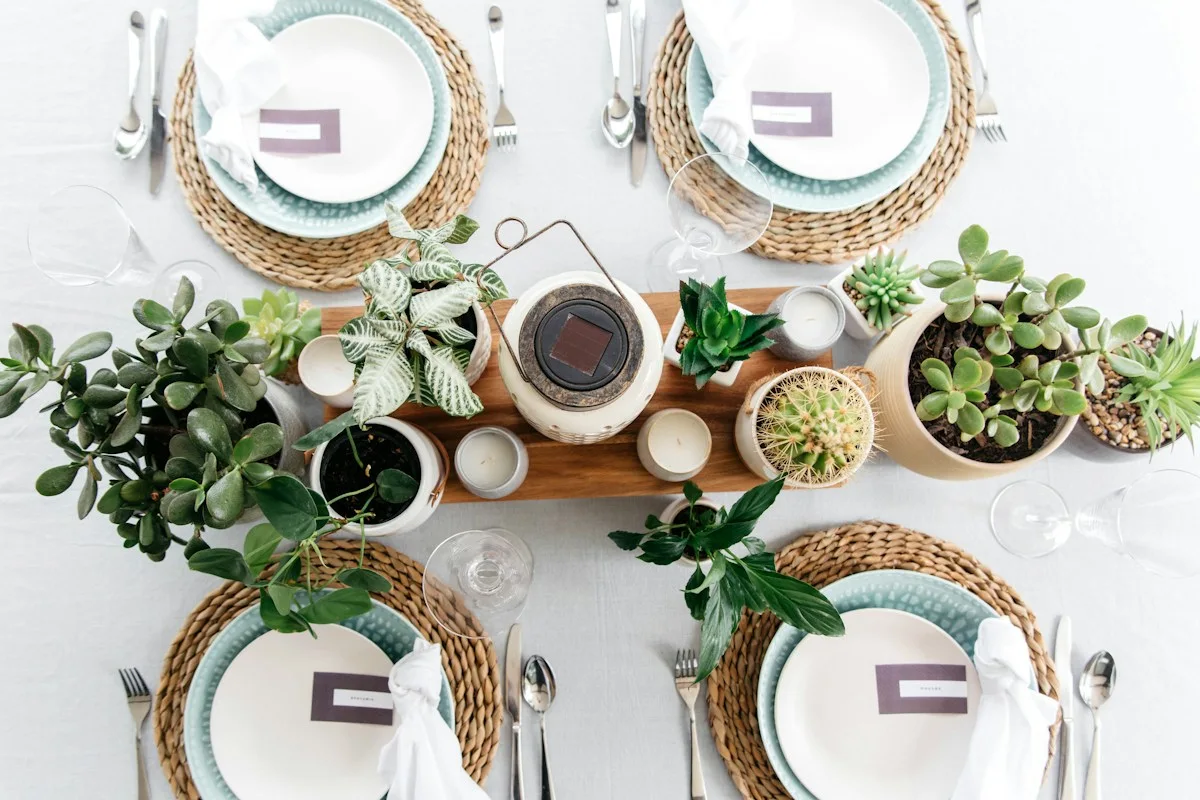
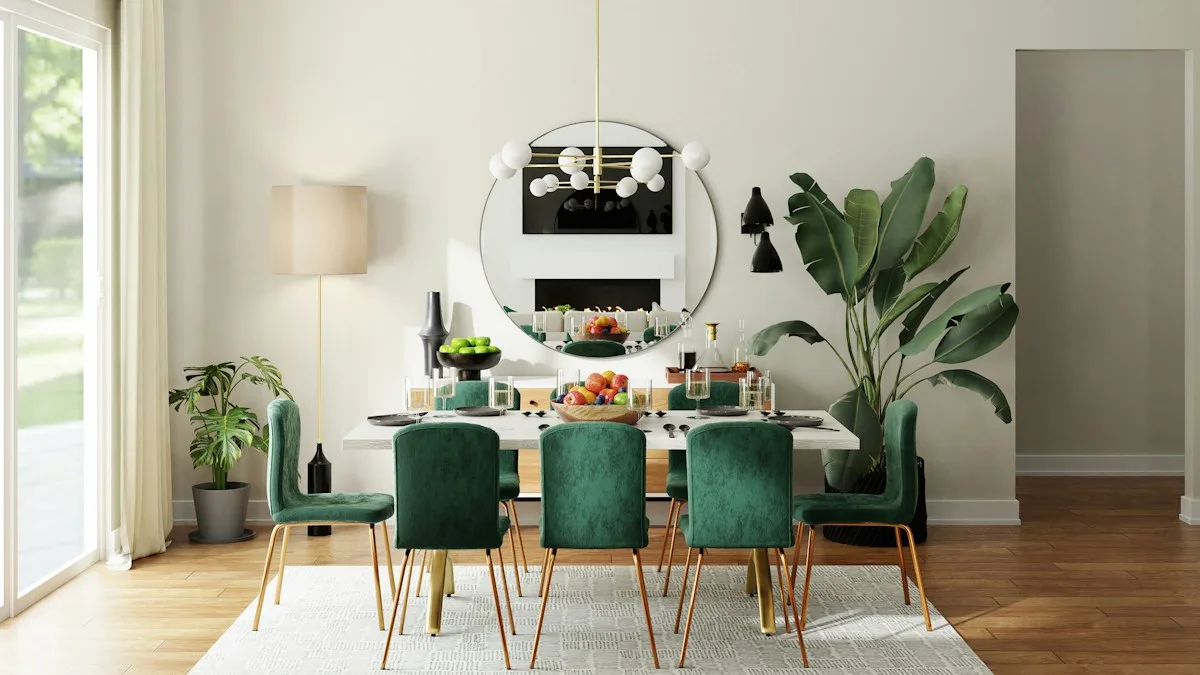
Lifestyle photography via Unsplash. Images illustrate the setting; pictured items are not product endorsements.
In this story
Friends are coming for dinner, and the table still holds a laptop, a charger and yesterday's post. The useful first step is to clear a complete surface, not to order a matching set of napkin rings. A welcoming table makes it easy to sit, eat, pass a bowl and talk. Decoration should support those activities. A mixture of familiar plates can feel generous when each person has what they need, and a carefully chosen detail can make an ordinary evening feel considered.
Give the everyday tasks a clear place
Decide how the food will be served before setting the table. Shared bowls need free space in the middle; plated food leaves more room for a simple arrangement. Put out the largest serving pieces first as a rehearsal, then build place settings around them. Check that glasses are within reach and chairs fit comfortably. If the table extends, open it before adding linen and make sure the extra leaf does not create an awkward route around the room.
Put the practical details in place
Use the plates and cutlery appropriate to the meal rather than every item in the cupboard. Keep flowers low enough for conversation and move decorative objects if serving dishes need the space. A washable cloth or placemats can add texture, but check whether they sit flat and stable. If you use candles, follow their safety guidance, keep them clear of fabrics and place them where nobody reaches across a flame. Lighting from another source should still make the meal easy to see.
What to look for when buying
For table linen, measure the table in the configuration you will actually host with, including any extension leaf. Check care instructions and whether you are willing to iron the fabric if the finish matters to you. A serving bowl needs a stable base and a shape that suits the food. Consider how it stacks with existing crockery; a beautiful wide rim may consume more cupboard space than expected.
| Option | Why consider it |
|---|---|
| Everyday placemats and a versatile serving bowl | It adapts readily to ordinary meals and mixed crockery. |
| A full tablecloth and coordinated serving set | It can create a consistent setting but needs more washing and cupboard space. |
Placemats and one adaptable serving bowl are useful when you want the setting to work for ordinary dinners as well as visitors. A full cloth can change the room's appearance more dramatically and conceal an uneven collection of table surfaces. It also creates a larger item to wash and store. Choose the option that supports the way you serve food, rather than assuming a formally dressed table is more welcoming.
Explore practical table linen at IKEA UK. Ordinary retailer link; recommendations above concern categories, not tested individual products.
A purchase worth reconsidering
Avoid buying a specialist piece for every dish you imagine serving. A useful bowl that works for salad, fruit or bread will earn more space than a narrowly shaped accessory used once a year. Check what you already own, and borrow occasional extras where practical. Matching everything is less valuable than keeping the table comfortable.
Keep the change useful
Set out the durable basics earlier in the day, then add food-sensitive or fragile details closer to the meal. Keep a clear landing place in the kitchen for used dishes. After guests leave, note which pieces made serving easier and which kept getting moved out of the way. That is a useful shopping list for the future.
Sit at each place before guests arrive and reach for the glass, napkin and nearest shared dish. Check that a vase does not obscure the person opposite and that decorative pieces are stable. Move one chair back as if someone were leaving during the meal. Once the setting works, stop adding layers. Empty space in the centre becomes useful as soon as bread, bowls and conversation arrive.
Frequently asked questions
Can mixed plates look intentional?
Yes. Repeat something simple, such as a napkin colour or glass shape, while letting the plates differ.
Is a centrepiece necessary?
No. Shared food can be the centre of the table. If space is limited, keep flowers or other decoration on a nearby surface.